Why Small Business Marketing Videos Are No Longer Optional
Small business marketing videos are one of the most powerful tools for attracting customers and driving sales in today’s digital landscape. Here’s what you need to know:
Quick Answer: Essential Video Types for Small Businesses
- Explainer & Product Demo Videos – Show what you offer and how it works
- Customer Testimonials – Build trust through social proof
- Educational How-To Videos – Establish expertise and help customers
- Behind-the-Scenes Content – Humanize your brand
- FAQ Videos – Answer common questions efficiently
How many videos have you watched today? Maybe a product review on YouTube, a quick recipe on Instagram, or a business tip on TikTok? The numbers don’t lie: 8 out of 10 people say they’d rather watch a video than read text when researching products or services.
But here’s the problem most small business owners face: video marketing feels expensive, complicated, and time-consuming. You might think you need a professional studio, fancy equipment, or a big budget to compete.
That’s simply not true anymore.
The reality is that your smartphone, some basic planning, and the right approach are enough to create videos that connect with customers and drive real results. In fact, 82% of consumers say a video has influenced their buying decision. That’s a massive opportunity you can’t afford to ignore.
This guide will show you exactly how to create effective marketing videos without breaking the bank. You’ll learn which types of videos work best for small businesses, how to make them on a budget, and where to share them for maximum impact.
I’m Christian Daniel, and through my work at Christian Daniel Designs, I’ve helped hotels, restaurants, and small businesses across NYC transform their online presence using custom websites and compelling small business marketing videos that drive bookings and conversions. Let me show you how video can work for your business too.
Small business marketing videos glossary:
Why Video is a Game-Changer for Small Businesses
Video marketing is simply a strategy that uses any form of video to promote your business across the web. From short TikToks to in-depth webinars, it’s all about telling your brand’s story in a visual and engaging way. And for small businesses, it’s not just another marketing channel – it’s a game-changer.
Here’s why small business marketing videos are so effective:
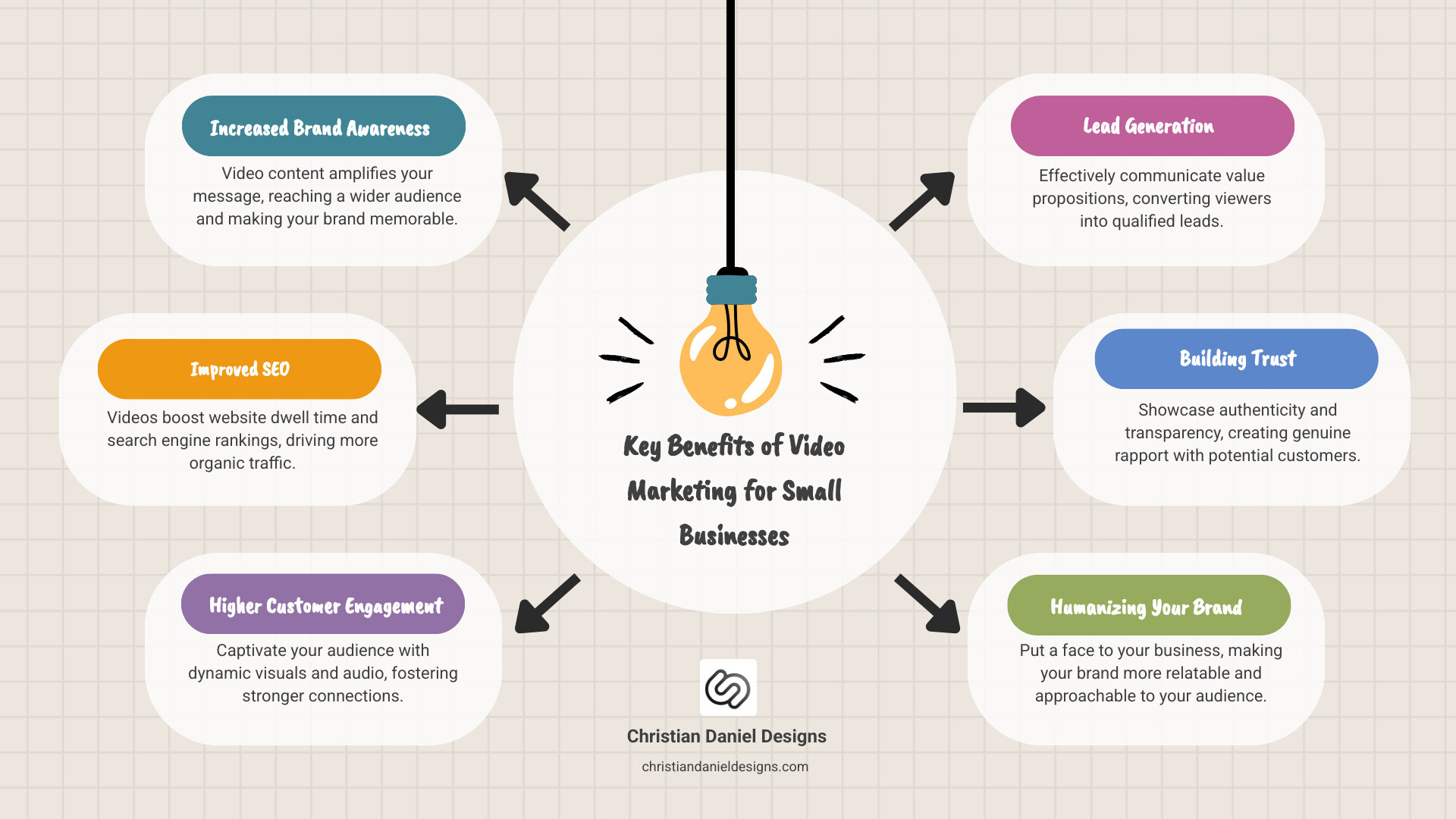
- Increased Brand Awareness: Videos make your brand more approachable and memorable. In a crowded digital marketplace, a well-crafted video can help your business stand out and stick in potential customers’ minds.
- Improved SEO: Did you know that websites with video are 53 times more likely to reach the front page of Google? Google loves video content, especially when it’s hosted on platforms like YouTube, which is owned by Google. Plus, 90% of people find new brands or products on YouTube, making it a powerful findy engine for your business.
- Higher Customer Engagement: Video captures attention like no other medium. Social media posts with video get 48% more views than non-video posts, and 92% of users watching videos will share them with others. This means more eyes on your content and more organic reach for your brand.
- Lead Generation: Businesses that use video marketing get 66% more qualified leads per year. Videos can effectively explain complex products or services, answer questions, and guide viewers toward becoming customers.
- Humanizing Your Brand: Video offers a unique opportunity to show the real people behind your business. This fosters connection, which is crucial in a market where 76% of consumers say they’re more likely to buy from brands they feel connected with. It helps build trust and relatability, especially important for small businesses.
- Impact on Purchasing Decisions: The statistics speak for themselves: 8 out of 10 people prefer to watch a video over reading text when researching products or services, and 82% of consumers say a video has influenced their buying decision. Video simplifies the buying process, making it easier for customers to understand your value proposition and make a choice.

Video allows us to communicate more effectively, build stronger relationships, and drive tangible results for our businesses. It’s about connecting with your audience on a deeper, more personal level.
9 Essential Types of Marketing Videos for Small Businesses
To help you steer small business marketing videos, we’ve identified nine essential types that can significantly impact your business. Each serves a unique purpose and can be custom to fit your specific goals and audience.
| Video Type | Primary Goal | Ideal Length | Best Platforms |
|---|---|---|---|
| Explainer & Product Demo | Simplify complex ideas, showcase value | 90-120 seconds | Website, YouTube, Social Media |
| Customer Testimonial & Case Study | Build social proof, increase credibility | 30-45 seconds | Website, Landing Pages, Social Media |
| Educational & How-To | Establish expertise, solve problems | 2-5 minutes | YouTube, Blog, Website |
| Behind-the-Scenes | Showcase culture, build authenticity | 15-60 seconds | Instagram, TikTok, Facebook |
| Founder & Brand Story | Create emotional connection, share values | 1-3 minutes | Website, About Us page, YouTube |
| FAQ Videos | Address common questions efficiently | 1-3 minutes | Website, YouTube, Help Center |
| Video Blogs (Vlogs) | Repurpose content, engage audience | 3-10 minutes | YouTube, Blog, Website |
| Personal Introduction | Build rapport, humanize outreach | 15-30 seconds | Email, LinkedIn, Website |
| Paid Ad Videos | Drive specific action, reach new audience | 15-60 seconds | Social Media Ads (Instagram, TikTok, YouTube) |
Let’s explore each type:
1. Explainer & Product Demo Videos
These videos are your chance to make complex ideas simple and showcase the true value of your product or service. They answer the crucial question: “What does it do, and how does it help me?” For instance, when Dropbox first launched, their explainer video simplified the concept of cloud storage, driving massive adoption. Petco Love also uses videos to explain its mission and impact. These videos are vital because 44% of consumers say they’d like to learn about a product or service by watching a short video.
Example: Imagine a local bakery in NYC creating a short explainer video showcasing their unique gluten-free bread-making process, highlighting the fresh ingredients and the care that goes into each loaf.
2. Customer Testimonial & Case Study Videos
Nothing builds trust like hearing from satisfied customers. Video testimonials are far more authentic and impactful than written reviews. Research shows that 46% of adults in the U.S. trust consumer-written online reviews, while only 10% trust ads on websites. Seeing and hearing real people share their positive experiences adds immense credibility to your brand.
3. Educational & How-To Videos
Position yourself as an expert in your field by creating videos that educate and solve common problems for your audience. These videos not only establish your authority but can also save your customer service team time by addressing frequently asked questions. For example, United Plumbing and Water Heaters has a YouTube channel featuring DIY videos on fixing common plumbing issues, building trust and showcasing their expertise.
4. Behind-the-Scenes Videos
People love authenticity. Showing a glimpse of your company culture, your team at work, or the process behind your products can humanize your brand and foster a deeper connection with your audience. FENTY, Rihanna’s makeup brand, often shares behind-the-scenes footage of product releases, making their audience feel more connected to the brand. This plays a big role in buyers’ decisions, as they want to relate to who they’re buying from.
Example: A New York City restaurant could share a quick video of their chef preparing a seasonal dish, showcasing the fresh, local ingredients and the passion behind their craft.
5. Founder & Brand Story Videos
Every small business has a unique story, and video is the perfect medium to tell it. Sharing your mission, your values, and the “why” behind your business creates an emotional connection with your audience. Shows like Shark Tank and podcasts like NPR’s How I Built This prove that people are captivated by origin stories. The Founders Brewing Company’s “The Story” video is a great example of sharing their journey while staying relevant to customers.
6. FAQ Videos
Save time and streamline communication by turning your most frequently asked questions into short, digestible videos. These videos proactively address potential customer concerns and objections, making the buying journey smoother. Since viewers are actively seeking answers, these videos can sometimes be longer than typical marketing videos.
7. Video Blogs (Vlogs)
Repurpose your written blog content into engaging video blogs. This caters to the 72% of people who would rather watch a video to learn about a topic than read text on the same page. Moz’s “Whiteboard Fridays” is a classic example of a company leveraging educational video series to share expertise. River Pools also created an extensive library of educational videos, demonstrating their employees’ expertise.
8. Personal Introduction Videos
Putting a face to your name can significantly build rapport. Short personal introduction videos can be used in sales emails, service follow-ups, or even on your website’s “About Us” page to humanize your outreach and make your brand feel more personal and accessible.
9. Paid Ad Videos
When you’re ready to reach a wider audience, paid ad videos are incredibly effective. These are typically short, attention-grabbing videos designed for specific calls to action on platforms like Instagram and TikTok. They allow you to target specific demographics and drive immediate results. Instagram Story ads are usually up to 15 seconds, while organic videos might be a little longer, ideally under 60 seconds.
Creating Compelling Small Business Marketing Videos on a Budget
Creating impactful small business marketing videos doesn’t require a Hollywood budget. With a strategic approach and the right tools, you can produce high-quality content that resonates with your audience.
Step 1: Strategic Planning and Scriptwriting
Before you even think about hitting record, it’s crucial to plan. This foundational step ensures your videos are purposeful and effective.
- Set SMART Goals: Like any marketing endeavor, start with clear, SMART goals. What do you want your video to achieve? (e.g., increase brand awareness by 15% in Q3, drive 100 website clicks, generate 20 new leads).
- Define Your Target Audience: Who are you trying to reach? Understanding their demographics, interests, and pain points will help you tailor your message and style. A video for New York City foodies will look very different from one for local small business owners.
- Brainstorm Content Ideas: What questions does your audience frequently ask? What problems can you solve? Look at your past top-performing blog posts or customer inquiries for inspiration.
- Write a Compelling Script: A good script is the backbone of any great video. Keep it concise, focus on the benefits your product or service offers, and “write visually” – describe what viewers will see on screen.
- Storytelling Structure: Every effective video tells a story. Structure yours with:
- Hook (first 3 seconds): Grab attention immediately.
- Problem: Identify a pain point your audience experiences.
- Solution: Introduce your product or service as the answer.
- Call-to-Action (CTA): Tell viewers exactly what to do next (e.g., “Visit our website,” “Book a table,” “Learn more”).
Step 2: Essential Tools and Leveraging AI
You don’t need expensive equipment to make great videos. Most people care more about what you’re saying than the gear you’re using.
- Essential Equipment:
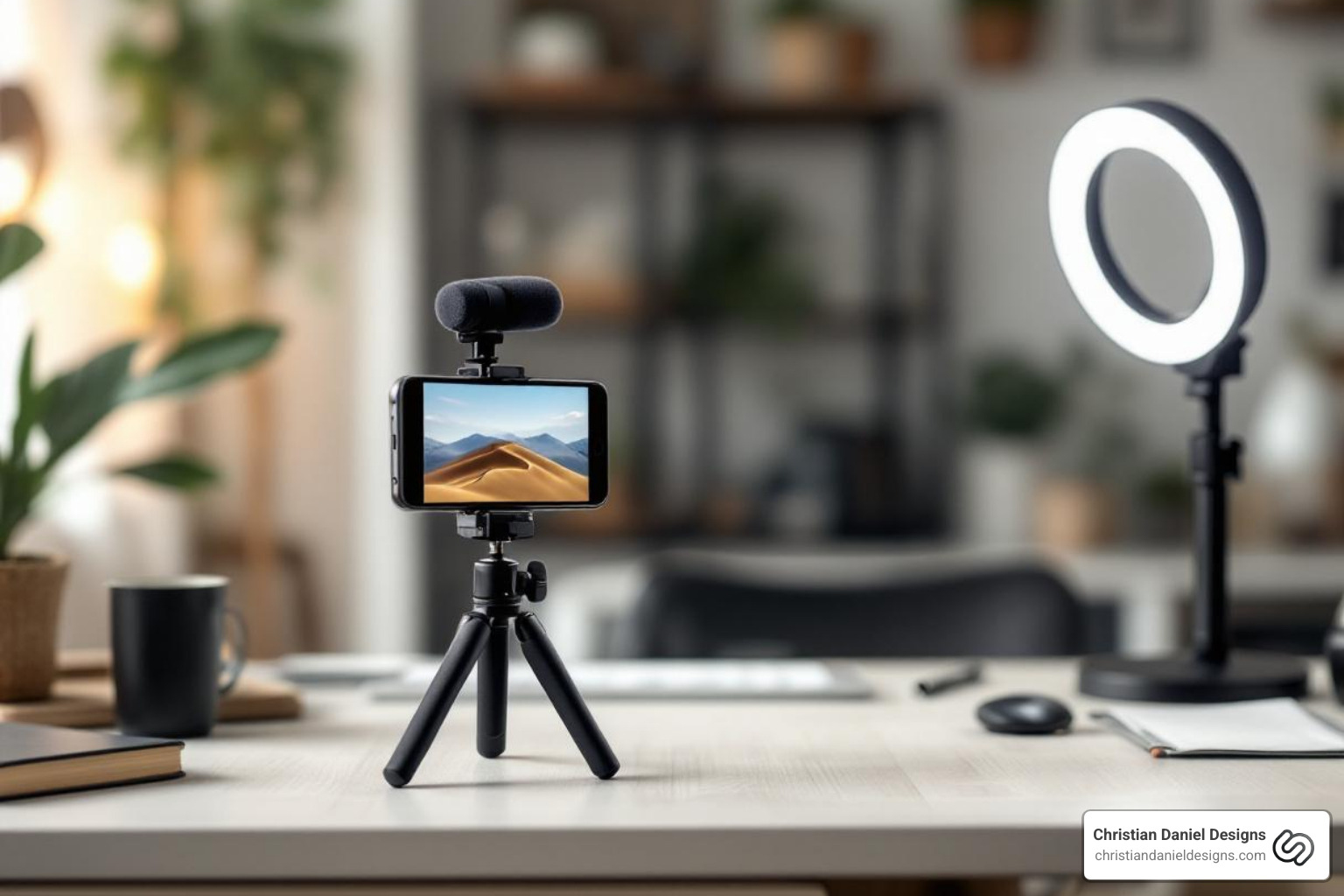
- Smartphone Camera: Modern smartphones shoot in incredible quality. Use what you have!
- Good Lighting: Natural light is your best friend. Position yourself near a window. If natural light isn’t enough, a simple ring light can make a huge difference.
- External Microphone: Clear audio is often more important than crisp video. A simple lavalier mic or even AirPods can significantly improve sound quality.
- User-Friendly Software: The market is flooded with intuitive tools that make editing less intimidating.
- AI Assistance: AI can be your secret weapon for efficiency.
- Script Outlines & Drafting: Tools like Writer AI can help you draft video scripts or suggest titles based on audience searches, saving you hours.
- Auto-Generate Captions: Most editing software and platforms offer AI-powered captioning, improving accessibility and SEO.
- Clean Up Audio: AI tools can also help reduce background noise, making your audio sound more professional.
Step 3: Filming and Editing for Maximum Impact
With your plan and tools in hand, it’s time for action!
- Filming Tips:
- Stable Camera: Use a tripod or prop your phone against something sturdy to avoid shaky footage.
- Clear Audio: Ensure your microphone is close enough to capture your voice clearly.
- Good Lighting: Avoid backlighting. Face your light source.
- Speak Clearly: Enunciate and speak at a moderate pace.
- Be Authentic: Let your personality shine through. People connect with realness.
- Eye Contact: Look directly into the camera lens to create a personal connection with your audience.
- Editing Tips:
- Add Captions: Essential for accessibility and for viewers who watch without sound. They also boost SEO.
- Include a Clear Call-to-Action (CTA): Make it obvious what you want viewers to do next.
- Incorporate Your Brand Kit: Use your logo, brand colors, and fonts to ensure consistency.
- Add Royalty-Free Music: Background music can improve the mood and professionalism of your video.
Maximizing Your Reach: Distribution and Measurement
Creating great small business marketing videos is only half the battle. To truly succeed, you need to know where to share them and how to measure their impact.
Where to Share and Promote Your Videos
Your distribution strategy should be as thoughtful as your creation process.
- Your Website: Embed videos directly onto your website. This boosts SEO (websites with video are 53 times more likely to rank higher) and increases time on site.
- YouTube: A must-have for any video strategy. Not only is it the second-largest search engine, but 90% of people find new brands or products here.
- Instagram Reels & TikTok: These platforms are trendier and where many consumers, especially younger demographics, spend their time. Short-form, engaging content thrives here.
- LinkedIn: Ideal for B2B businesses or those looking to establish thought leadership. Professional, educational, and behind-the-scenes content performs well.
- Email Newsletters: Dropping clickable video thumbnails into your emails can significantly increase engagement. Emails with video can boost click-through rates by 96%.
- Distribution Strategy: Don’t just upload a video once and forget it. Repurpose one core video into multiple formats (e.g., a long-form explainer cut into short social media clips). Always optimize content for each social media platform, considering ideal lengths, aspect ratios, and audience behavior.
How to Measure the Success of Your Small Business Marketing Videos
Measuring success is crucial for refining your strategy and proving ROI.
- Key Metrics (KPIs):
- View Count: How many people saw your video?
- Watch Time & Audience Retention: How long did people watch? Did they finish the video? This indicates engagement.
- Engagement Rate: Likes, comments, shares – how did people interact with your content?
- Click-Through Rate (CTR): For videos with a CTA, how many people clicked it?
- Conversion Rate: Did the video lead to a sale, a sign-up, or a booking?
- Analytics Tools:
- Native Platform Analytics: YouTube Studio, Meta Business Suite, and TikTok’s analytics provide valuable insights into your video performance on their respective platforms.
- Google Analytics: Track how video views on your website impact overall site engagement and conversions.
- CRM Integrations: For a more comprehensive view, integrate your video marketing with your CRM. Tools like OneMob, Vimeo, Vudoo Commerce, and Storylane can connect with CRM systems like Salesforce to track viewer interactions directly to lead and sales data. This allows you to see which videos truly convert.
Frequently Asked Questions about Video Marketing
We often hear similar questions from small business owners about diving into video marketing. Here are some of the most common ones:
What is the ideal length for a marketing video?
There’s no one-size-fits-all answer, as it depends heavily on the platform and purpose.
- Social Media (TikTok, Instagram Reels, Facebook): Aim for under 60 seconds. Short, punchy content thrives here. Instagram Story ads can be as short as 15 seconds.
- Website Explainer/Product Demos: Typically 90-120 seconds for a quick overview, but can extend to 2-4 minutes for more in-depth explanations if your audience is engaged.
- In-Depth Tutorials or Webinars (YouTube, Website): These can be 5 minutes or much longer, as viewers are actively seeking detailed information.
The key is to match the length to the message and the audience’s expected attention span on that platform.
How often should a small business post videos?
Consistency is far more important than sheer volume. It’s better to post one high-quality, well-planned video a week than five rushed, low-quality ones. Start with a manageable goal, like one or two videos per week, and build from there as you get more comfortable and learn what resonates with your audience. Regular posting keeps your brand top of mind and helps platform algorithms favor your content.
Do I have to show my face in my videos?
Absolutely not! While showing your face can help build trust and make your brand feel more personal, it’s not a requirement. Many effective small business marketing videos use:
- Screen Recordings: Perfect for software demos or online tutorials.
- Animated Videos: Excellent for explaining complex concepts in a visually engaging way.
- Text-Overlay Videos: Combine engaging visuals with text to convey your message.
- Product-Focused Videos: Showcase your products in action without needing a person on screen.
Choose the format that best suits your message and your comfort level.
Conclusion: Press Play on Your Business Growth
As we’ve explored, small business marketing videos are no longer a luxury but a necessity for growth and connection in today’s digital world. They are accessible, powerful, and essential for building brand awareness, engaging customers, and driving sales. The good news is that you don’t need a massive budget or a professional studio to get started. With a clear plan, the right tools, and a commitment to authenticity, your small business can leverage the power of video to tell its unique story and achieve remarkable results.
Start small, focus on providing value, and don’t be afraid to experiment. For hotels, restaurants, and small businesses in New York City looking for a professional touch, Christian Daniel Designs specializes in creating scroll-stopping videos that drive bookings and boost brand credibility with powerful WooCommerce functionality. We’re here to help you turn viewers into loyal customers.
Ready to lift your brand with a stunning website and compelling video content? Explore our services for small businesses.

